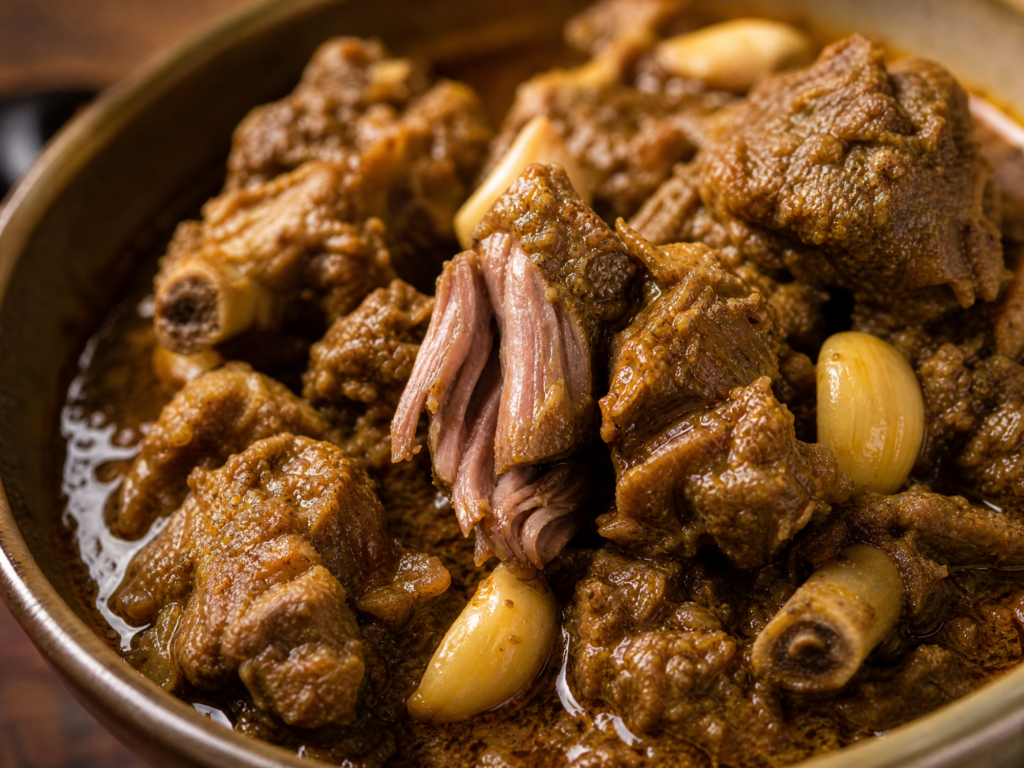
Champaran Mutton (Ahuna) — Bihar’s Sealed-Pot Curry, Home-Kitchen Version
You don’t have a clay handi. Neither did I when I first tried to make this. That single fact stops more people from attempting Champaran Mutton than any actual difficulty in the recipe itself, and it’s worth saying upfront: a Dutch oven or any heavy, thick-bottomed pot with a lid does the job properly. Not as a workaround. As the actual method.
With that out of the way, let’s talk about what makes this dish worth the slow afternoon it asks for.
Meat Cooked In Nothing But Itself
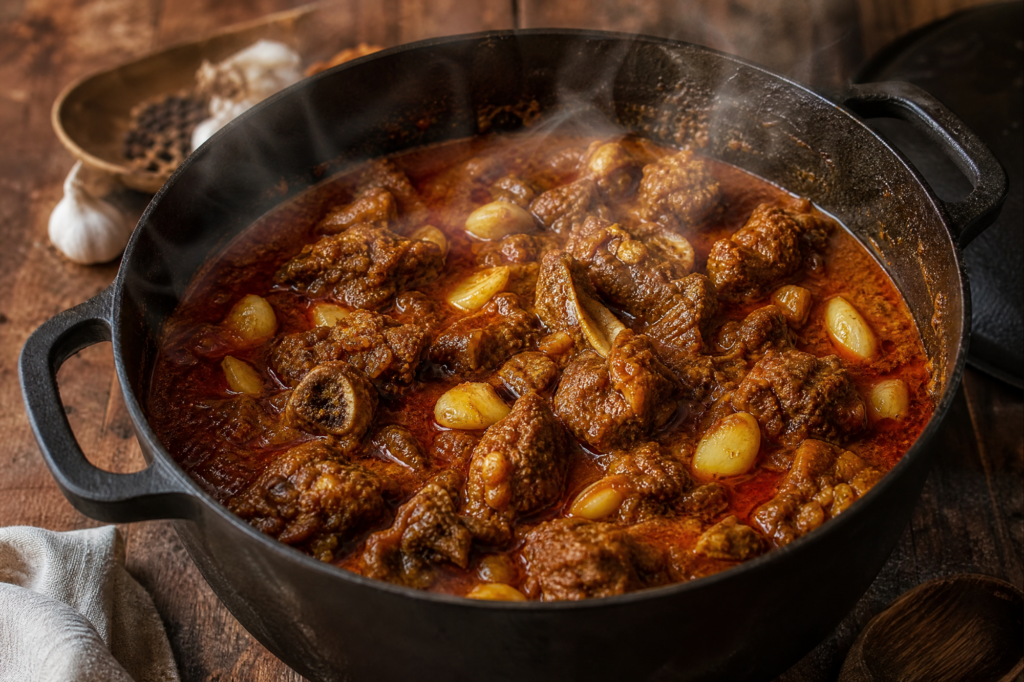
Champaran Mutton — also called Ahuna, Handi Meat, or Batlohi depending on which part of Bihar you’re in — comes from the Bhojpuri region, and its defining trait is almost stubborn in its simplicity: no water gets added at any point. The mutton cooks entirely in its own released juices and the moisture that onions give up as they soften. Everything else in the pot is there to flavor that self-created liquid, not to add to it.
This is why the sealing matters so much. Once the lid goes on and the rim gets sealed with a simple dough, nothing escapes and nothing gets added. You’re not simmering the mutton in a sauce you made — you’re trapping the mutton in a sealed environment and letting it essentially steam-braise in what it produces.
What You Will Need
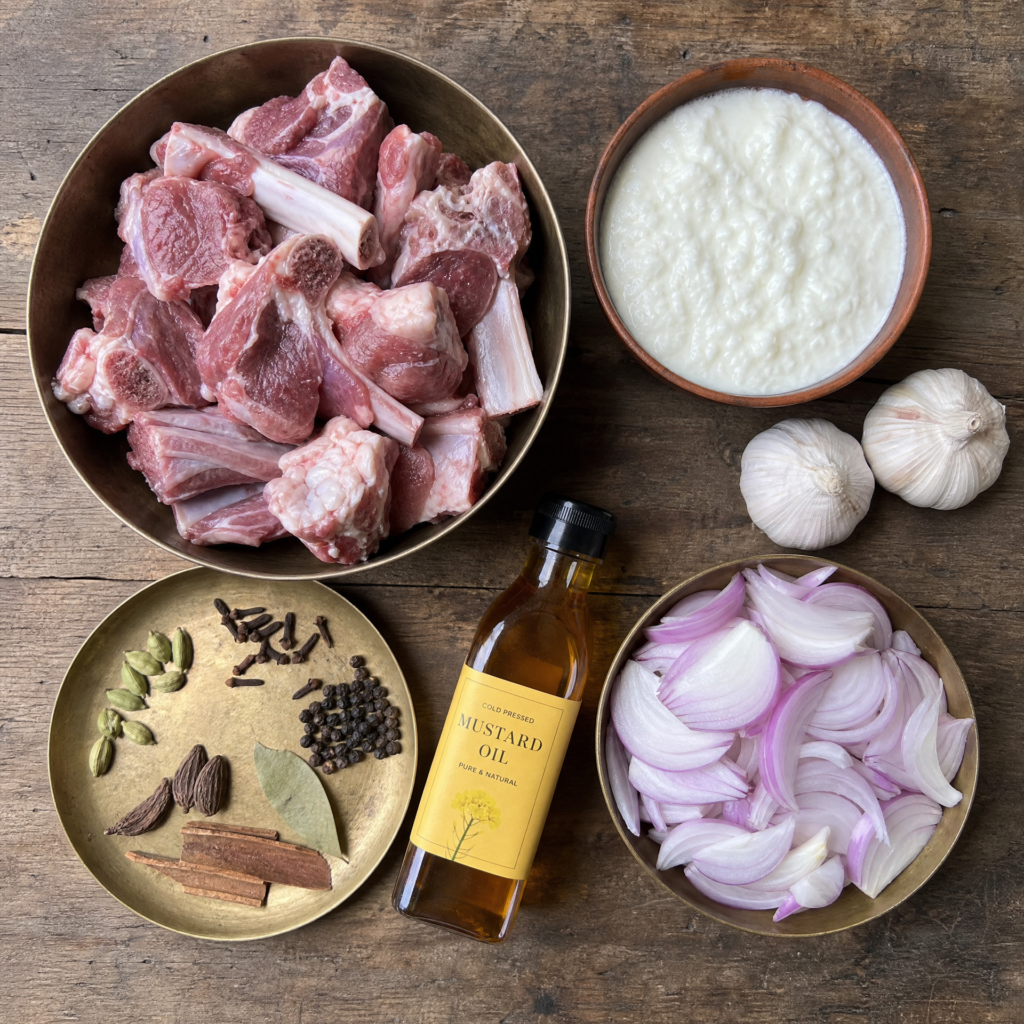
- 1 kg bone-in mutton, cut into curry pieces
- 1 cup thick yogurt (curd)
- 4-5 tablespoons mustard oil
- 2 tablespoons ghee
- 2 whole garlic bulbs, cloves separated and peeled (yes, whole bulbs, not a few chopped cloves)
- 1-inch ginger, roughly chopped
- 4 large onions, thinly sliced
- 2-3 green chilies, slit
- 1 teaspoon turmeric powder
- 2 teaspoons red chili powder
- Whole spice mix: 4-5 green cardamom, 4-5 cloves, 1-inch cinnamon stick, 1 teaspoon fennel seeds, 1 blade mace, 1 teaspoon poppy seeds, a pinch of grated nutmeg — dry roasted and ground fresh
- Salt to taste
- Wheat flour and water, enough to make a firm dough for sealing the pot
On the garlic: this isn’t an exaggeration or a typo. Whole bulbs, not just a spoonful of chopped cloves, go into this dish. It sounds like a lot until you taste the finished curry — the garlic mellows completely during the long, sealed cook and becomes soft, almost sweet, rather than sharp.
The Step That Changes Everything About The Flavor
Heat the mustard oil and ghee together in a small pan until the mustard oil loses its raw, pungent sharpness — you’ll notice the smell mellow and turn slightly nutty. Then take it off the heat and let it cool down completely before using it anywhere near the meat.
Skipping this step is the single most common way people end up with a dish that tastes noticeably different from what it should. Hot oil mixed directly into a yogurt marinade can split the yogurt and cooks the surface of the meat prematurely, working against the slow, even marination you actually want. Cooled oil blends into the yogurt smoothly and lets the marinade do its job properly.
Marinating The Mutton
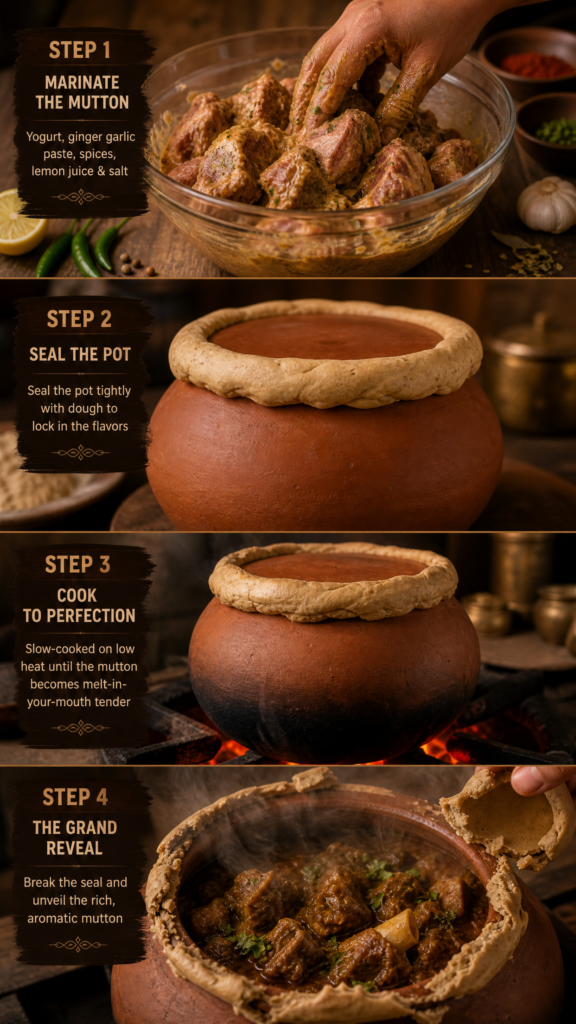
In a large bowl, combine the mutton with yogurt, the cooled mustard oil and ghee mixture, turmeric, red chili powder, half the whole garlic cloves (left whole), ginger, and salt. Mix thoroughly, making sure every piece gets coated.
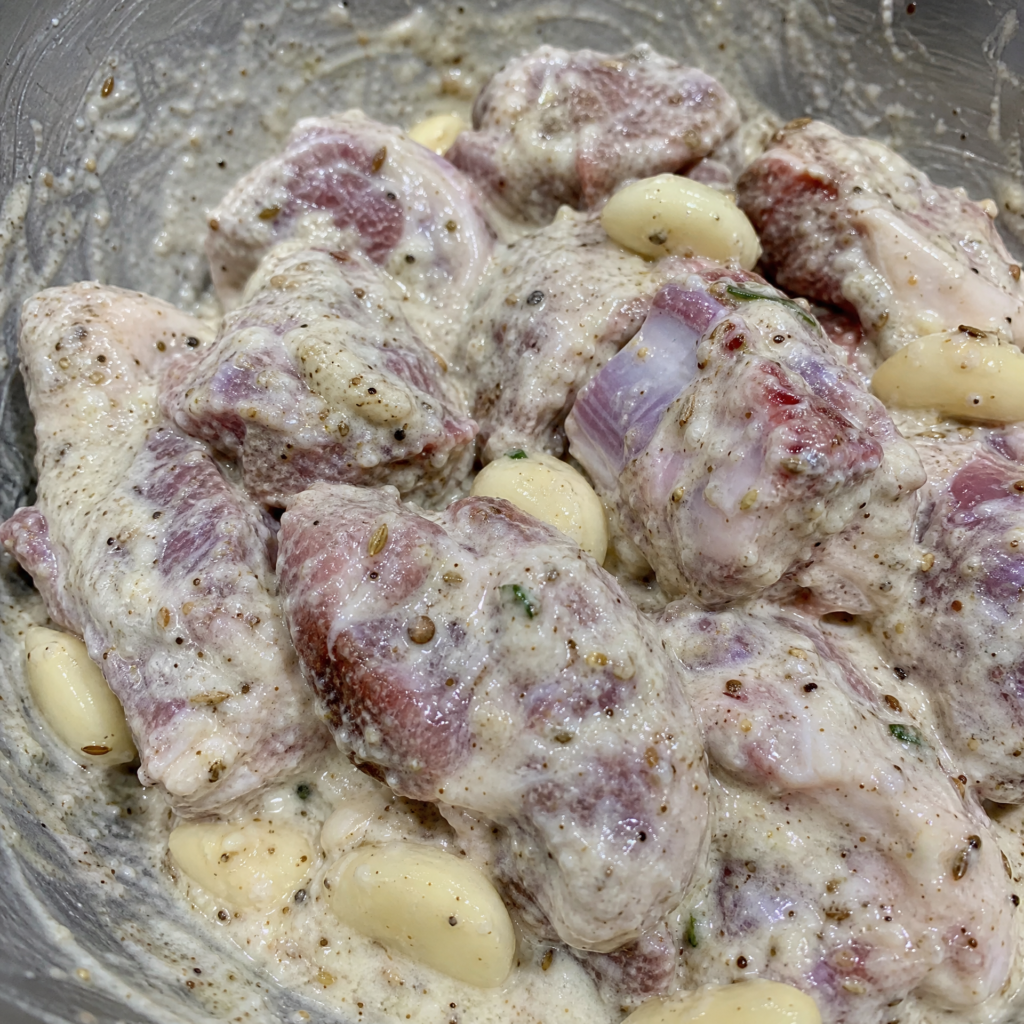
The yogurt here isn’t just for flavor — it’s doing real tenderizing work on the meat over time. Cover and let this marinate for at least 2 hours, though overnight in the refrigerator gives you noticeably better results if you have the time to plan ahead.
Building The Base And Sealing The Pot
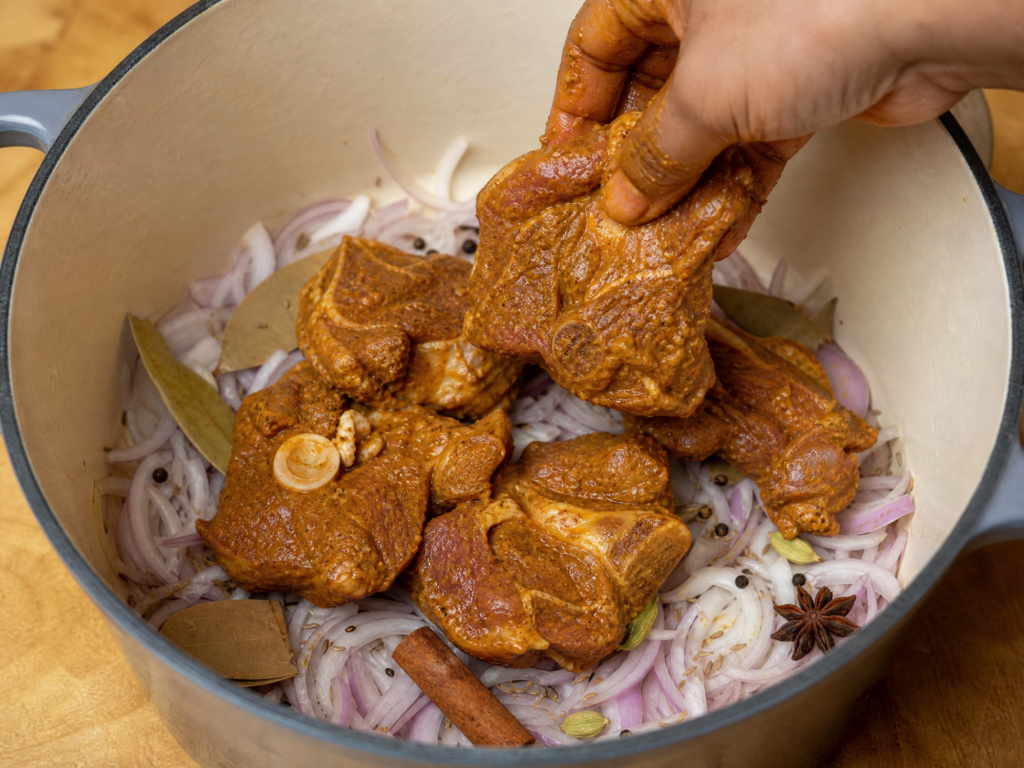
In your Dutch oven or heavy-bottomed pot, layer the sliced onions at the bottom. Add the remaining whole garlic cloves, green chilies, and the freshly ground whole spice mix over the onions. Place the marinated mutton on top of this bed rather than mixing everything together in one go — this layering matters for how the flavors build as everything cooks down.

Now for the dough seal. Mix wheat flour with just enough water to form a firm, pliable dough — similar consistency to roti dough. Roll it into a long rope and press it around the rim of the pot, then place the lid on top, pressing down so the dough seals the gap between pot and lid completely. This dough isn’t part of the dish; it’s purely functional, trapping every bit of steam and aroma inside rather than letting it escape.
Cooking It Low And Slow
Place the sealed pot over a very low flame. This is not a dish you can rush by turning up the heat — low and slow is the entire mechanism that makes it work, giving the mutton time to release its juices gradually rather than seizing up under high heat.
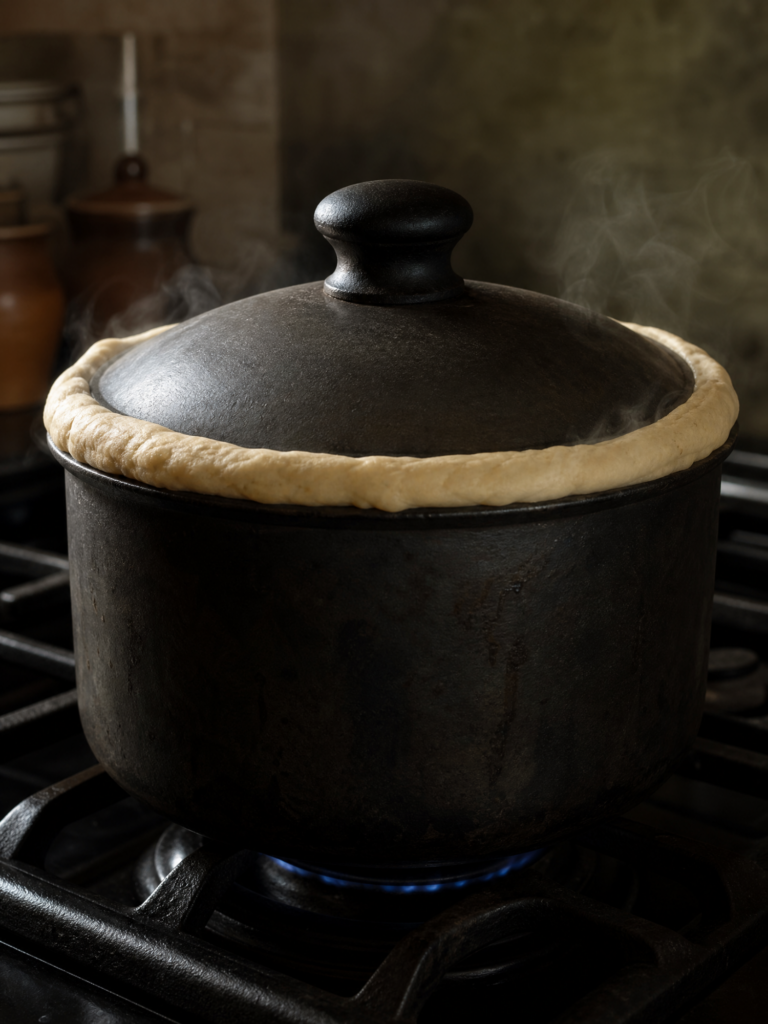
Every 15 to 20 minutes, gently shake the entire pot from side to side rather than opening it to stir. This keeps things from sticking to the bottom without breaking the seal or losing any trapped steam. Resist the urge to peek — every time you break that seal early, you let out moisture and heat that the dish needs to stay in.
Total cooking time typically runs 60 to 90 minutes depending on the size and cut of your mutton pieces, but there’s a genuine way to check doneness without opening the pot: insert a toothpick or thin skewer through a small gap near the dough seal. If it slides through the meat with no resistance, it’s done. If you feel any firmness, reseal that small gap with a bit more dough and give it another 15 minutes.
Why You Shouldn’t Rush The Finish
Once the mutton is fork-tender, take the pot off the heat completely and let it rest, still sealed, for 10 to 15 minutes before breaking it open. This isn’t a throwaway step — the flavors continue settling and the juices redistribute through the meat during this rest, and skipping straight to serving loses some of that final depth.
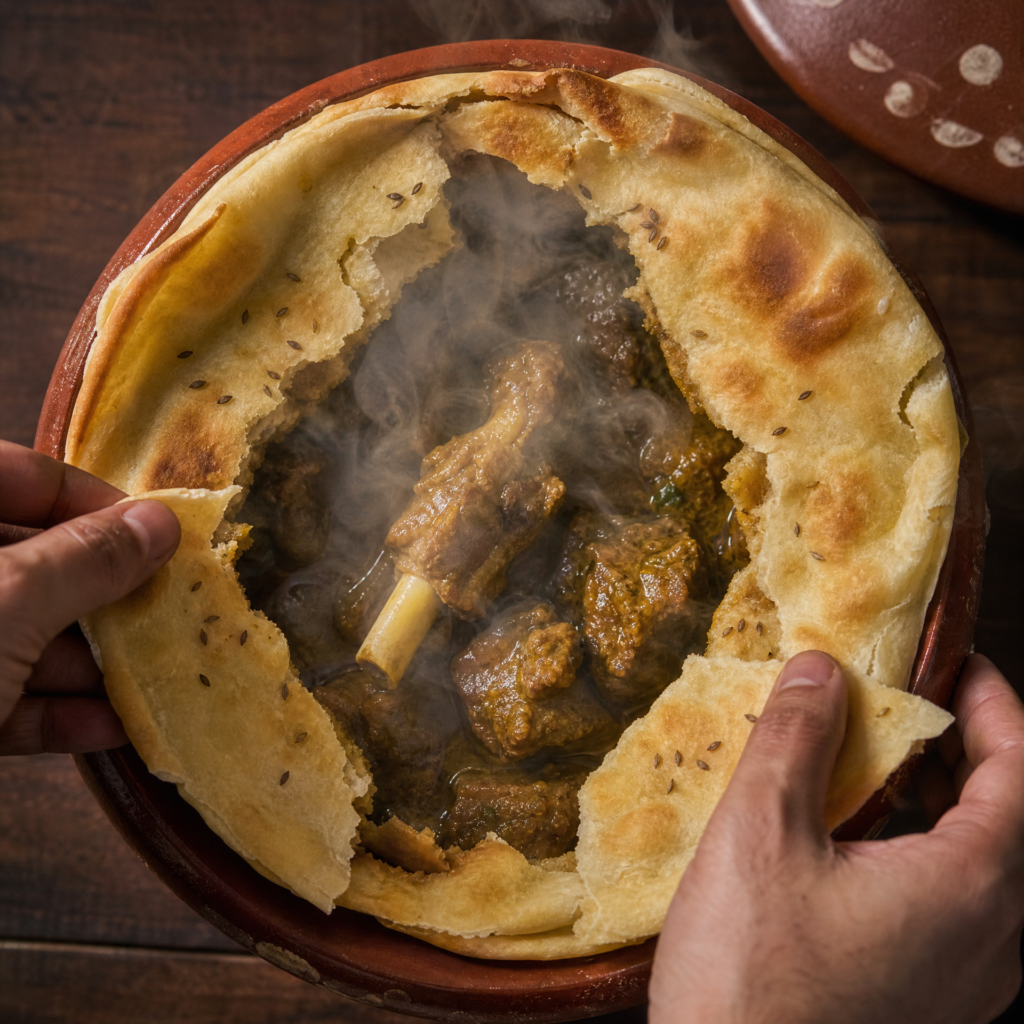
When you do break the seal, do it somewhere you don’t mind the aroma filling the room, because it will. Serve hot with rice, roti, litti, or paratha — all four are traditional pairings, and honestly the choice comes down to what you’re in the mood for rather than any strict rule.
A Note On Where This Dish Comes From
Champaran district’s name carries real historical weight in India — it’s where Gandhi launched the Champaran Satyagraha in 1917, his first major act of civil resistance after returning from South Africa, organizing indigo farmers against exploitative British planters. The dish’s popularity is often loosely associated with this history and the region’s identity, though it’s worth being precise here: this is a naming and regional-pride association, not a documented culinary origin story tracing back to that specific movement. The connection is real in how people talk about Champaran today, even if the mutton recipe itself predates or exists independently of that particular historical moment.

If Your Batch Doesn’t Turn Out Right
Meat still tough after the expected time: your flame was likely too high, cooking the outside faster than the inside could tenderize, or your mutton pieces were larger than average. Reseal and give it another 20-30 minutes on genuinely low heat rather than raising the temperature to speed things up.
Curry tastes thin or watery: this usually means the seal wasn’t tight enough and steam escaped throughout cooking. Check your dough seal for gaps next time, pressing firmly all the way around the rim.
Garlic tastes sharp instead of mellow: this typically means the cook time wasn’t long enough, or the pot was opened and resealed too many times, letting heat escape each time. The whole cloves need the full sustained cooking time to break down properly.
Storage Notes
This curry keeps well in the refrigerator for up to 2 days. Reheat gently on low flame rather than high heat, which can toughen the meat that took so long to tenderize in the first place.
When To Make It
- Weekend family meals — the cook time makes this a relaxed, unhurried dish rather than a weeknight rush
- When you want something beyond tomato-based curry — genuinely different flavor profile from typical restaurant mutton
- Special occasions — the reveal moment of breaking the seal has real presence at a table
- Make-ahead entertaining — reheats well, so it can be made a day before guests arrive
Try this recipe when you have an unhurried afternoon to give it. Let me know in the comments whether you used a Dutch oven or found a clay handi, and how the toothpick doneness check worked out for you.
🟢 Free 30-Day Desi Smoothie Challenge
If you’re exploring regional Indian cooking with us, you’ll enjoy our 30-Day Desi Smoothie Challenge too. Completely free.
Every day for 30 days, get a new desi smoothie recipe — simple, healthy, and under 10 minutes each.
👉 Join the Free 30-Day Desi Smoothie Challenge here
Or join our WhatsApp Channel for daily recipes and updates.
👉 Join our WhatsApp Channel here
Want 264 More Desi Smoothie Recipes?
Get the complete Desi Smoothie Bible — 264 desi smoothie recipes covering classic Indian flavors, protein shakes, detox blends, and more.
👉 Get the Desi Smoothie Bible here
This is part of our Forgotten Flavors of India series — we’re continuing through Bihari cuisine alongside Parsi and Northeast Indian dishes. Check back weekly for new additions on TastyTykes.com
🛒 Ingredients
Published on July 26, 2026 · TastyTykes.com